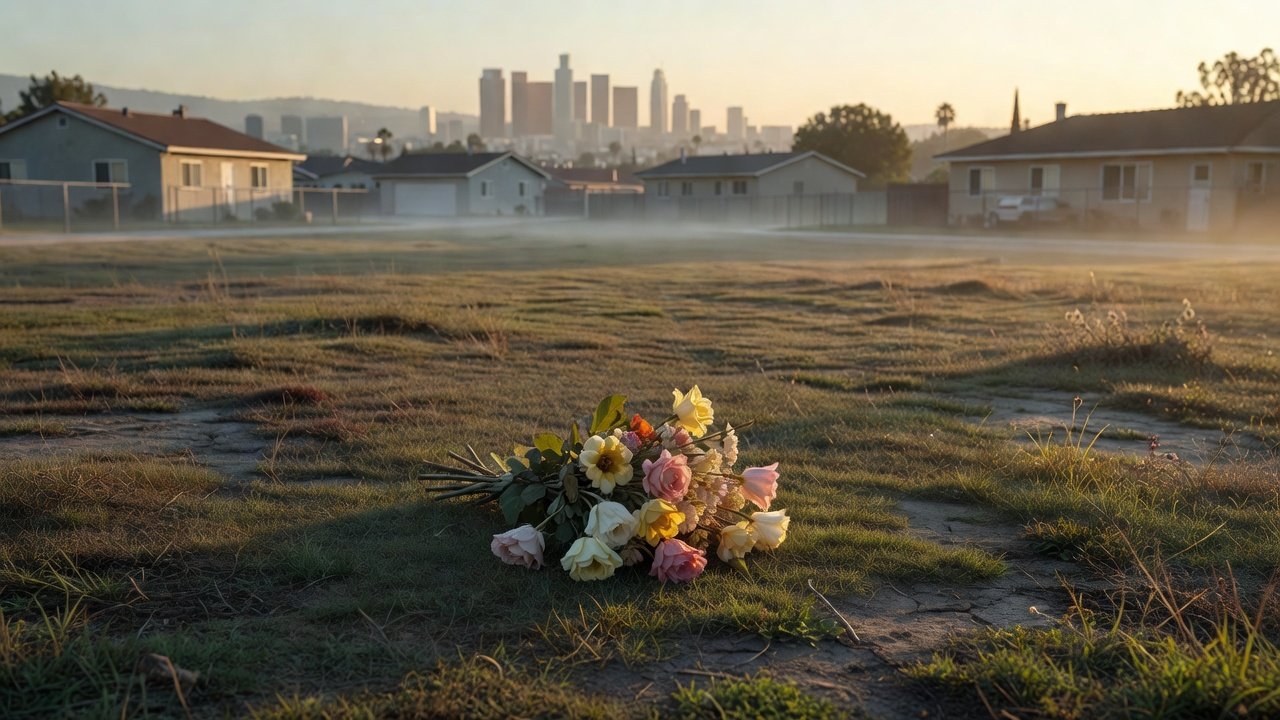
On January 15, 2027, it will be 80 years since the body of Elizabeth Short was found in a vacant lot in Leimert Park, Los Angeles. She was 22. The case still has no arrest and no official solution. This is our early guide to what the anniversary is likely to bring and which questions are actually unresolved. I should say plainly: I found no confirmed official events scheduled for the 80th, so what follows about “January” is expectation, not announcement.
What Is Documented
Short was born July 29, 1924, in Boston, and moved to Los Angeles in July 1946. Her body was found on the morning of January 15, 1947, on South Norton Avenue between Coliseum Street and West 39th Street. Los Angeles County coroner Frederick Newbarr performed the autopsy the next day. The stated cause of death was hemorrhage from facial lacerations along with shock from blows to the head and face.
The investigation was enormous. Wikipedia reports about 750 officers from the LAPD and other agencies initially worked the case, and more than 150 men were interviewed. Police logged about sixty confessions early on, and over 500 people have confessed since. Most were deemed false, and several were charged with obstruction. A grand jury in September 1949 reviewed the LAPD homicide unit’s failures, Short’s among them, and produced no breakthrough.
What 2026 Already Changed
Two developments set the stage. First, William J. Mann’s book Black Dahlia: Murder, Monsters, and Madness in Midcentury Hollywood (January 2026) argued for a new solution built on five years of archive work. We reviewed it in our book review; my verdict was that its method impressed me even though the mystery remains open.
Second, a records fight. LA Magazine reported on May 28, 2026, that Talestorm Productions and the Justice Cannot Be Silenced Foundation, tied to the docuseries Deconstructing Dahlia, launched a petition asking the LAPD to release Short’s complete unredacted autopsy report and other withheld records. The petition’s backers say surviving family members support it. The report says the LAPD had not publicly responded. These are the petitioners’ claims, which I have not independently verified.
Suspects Cleared Along the Way
Part of the record is who the police ruled out. Nightclub owner Mark Hansen was named early and later cleared. Robert “Red” Manley, one of the last people to see Short alive, passed polygraph tests and was cleared. Folk singer Woody Guthrie was briefly a suspect and cleared too. Remembering these names matters because the Dahlia case has a long history of reputations damaged by speculation. Reporter Aggie Underwood of the Herald-Express was among the first at the scene, which is part of why the press shaped the story from the first morning.
What January 2027 Will Probably Look Like
Based on prior anniversaries (see our 77th anniversary piece), expect a wave of retrospectives, podcast episodes and local news segments around January 15. A round number like 80 invites bigger attention: new books and documentaries tend to time their releases to it, and the records petition gives journalists a news hook. Whether the LAPD answers it is the single most concrete thing worth watching.
What I would not expect is a solved case. After eighty years, one outlet notes the department still receives tips, but nothing public suggests an imminent arrest.
What Is Still Unresolved
- The killer’s identity. Suspects named by authors include George Hodel, accused by his son, retired LAPD detective Steve Hodel. Wikipedia notes that 2003 grand jury notes revealed investigators had wiretapped Hodel’s home. Hodel was never charged.
- Access to records. Autopsies are normally public in California, which is why the petition matters. See our public-records explainer.
- Which claims are myths. Early press coverage spread claims of torture that Wikipedia says were false, though police let them circulate. Always check the primary record.
A Reading Plan Before January
If you want to arrive at the anniversary informed rather than just curious, work in this order. Start with the documented facts above and our case file. Next read Mann’s book with the same skepticism we applied in our review, noting where he separates documented evidence from inference. Then look at the 2003 grand jury material that surfaced around the Hodel theory, and compare it with what Hodel’s critics say. Last, read the petition coverage so you know which records are actually in dispute. Every new theory that appears in January should be held to one test: does it explain the physical findings from the January 16, 1947 autopsy, and does it come with documents anyone can check?
How to Mark the Anniversary Well
Read the foundational record first, including our Black Dahlia case file, and treat any single-suspect theory as a theory. Remember that Elizabeth Short was a young woman with a family, not only a mystery, and that her sisters Elnora and Muriel have died, in 2022 and 2023. The best tribute to her memory is accuracy.
