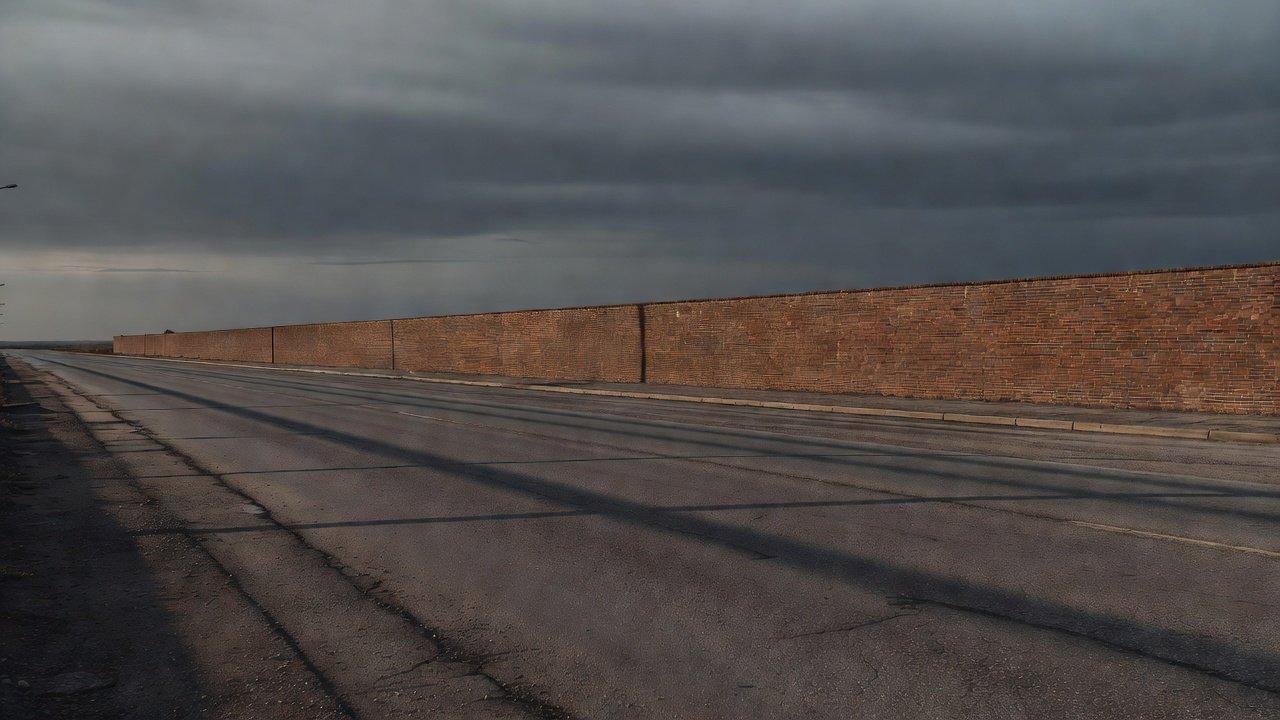
There is a specific kind of true-crime case that the internet cannot leave alone, and Mackenzie Shirilla’s is the purest example I have seen in years. A teenager drives into a brick wall. Two people die. The question of whether it was a catastrophic accident or a deliberate act turns almost entirely on material that did not exist as evidence in any meaningful way twenty years ago — phone data, GPS pings, group chats, and a social-media presence that prosecutors read like a diary.
Netflix released The Crash on May 15, 2026. The reviews that followed disagreed so sharply about what the film is doing that the disagreement is itself the most interesting thing about it.
What the Record Establishes
The facts of the underlying case are not seriously in dispute, and it is worth separating them from the documentary before getting to the documentary.
In July 2022, Shirilla — then 17 — drove her car into a building in Strongsville, Ohio. Her boyfriend, Dominic Russo, and his friend Davion Flanagan were both killed. Prosecutors argued she was traveling at close to 100 miles per hour and never braked.
That last detail is the load-bearing one. Investigators found no skid marks and no evidence of braking. GPS data indicated she had been to that industrial area before. Her phone and social-media activity, along with the documented state of her relationship with Russo, formed the prosecution’s argument that this was intentional rather than a loss of control.
Shirilla waived a jury. In 2023, Cuyahoga County Common Pleas Judge Margaret Russo — no relation to the victim — found her guilty of murder and sentenced her to life with parole eligibility after 15 years. The Cuyahoga County Prosecutor’s Office laid out the state’s theory at sentencing.
The appeals have not gone her way. The Eighth District Court of Appeals upheld the conviction, later ruling that her team filed its supplemental post-conviction relief petition too late. The Ohio Supreme Court then declined to review the case — a decision that landed after the documentary had already put the case back in front of millions of people.
Why the Critics Split
Here is where it gets genuinely interesting, because the reviews are not disagreeing about quality in the usual way. They are disagreeing about what kind of object the film is.
One reading treats it as forensic. The National’s review frames the documentary as shining a light on what criminal justice looks like in an era when defendants have documented their own inner lives in public. On that reading, the film’s subject is not really Shirilla. It is the evidentiary weight we now assign to a teenager’s posts, and whether that weight is appropriate.
The other reading is considerably less generous. Pajiba’s assessment calls it ghoulish and argues the film is doing something structurally cynical — pitting audiences against each other to drive engagement, which is a business model rather than a thesis.
Slate’s piece splits the difference by arguing the film knows exactly why Shirilla is fascinating and builds itself around that fascination rather than interrogating it.
These are not incompatible observations. A film can assemble a genuinely careful evidentiary account and still be structured to maximize the argument in the comments. Most of the streaming true-crime slate does both simultaneously. That is the format.
The Part That Actually Deserves Scrutiny
Strip away the review disagreement and there is a real question underneath, and it is not “did she do it.” The courts have answered that repeatedly and consistently.
The question is what it means that the most quotable evidence in a murder case is a person’s own digital exhaust.
Prosecutors used Shirilla’s messages and social presence to establish state of mind. That is legitimate — intent has always been proven circumstantially, and letters and diaries have been doing this work in courtrooms for a century. But there is a genuine difference in kind between a diary and a social feed. A diary is written for one reader. A feed is performed. A 17-year-old’s posts are, among other things, an audition for an audience, and the gap between performance and intention is exactly where a fair reading has to be careful.
The physical evidence in this case does not depend on any of that. No braking, no skid marks, a documented prior visit to the location, and a vehicle at roughly 100 miles per hour into a fixed structure. That is the case. The digital material is what made it a phenomenon.
A documentary that foregrounds the second category over the first is making an editorial choice, and viewers should notice when it happens — not because the conclusion is wrong, but because the reasoning is what you are actually being asked to evaluate.
Where This Sits in the Genre
The Crash arrives in a stretch where streaming true crime has been converging on cases with exactly this profile: young defendants, ambiguous-looking physical events, and an enormous documentary trail generated by the subjects themselves. The appeal is obvious. The material is pre-assembled, the audience can play detective with primary sources, and the ambiguity sustains discourse for weeks.
What I want from the genre, and get less often than I would like, is a film willing to say plainly which evidence carried the verdict and which evidence carried the internet. Those are different lists. In this case they are very different lists, and the second one is much longer.
If you come out of The Crash arguing about Shirilla’s posts, the film has worked as content. If you come out of it thinking about skid marks, braking data, and what a court is actually permitted to infer from a teenager’s public performance of a bad relationship, it has worked as journalism.
Both outcomes are available. Which one you get depends more on how you watch it than on how it was made.


